




- En
- Fr
- عربي



Military Agreements: Security Cooperation or Strategic Control?
Military Agreements: Security Cooperation or Strategic Control?
Abstract
Agreements are basic tools that help countries and societies work together, stay organized, and know what to expect from each other1. In international relations, agreements are important because they help countries interact with each other even though there is no world government in charge2. Military agreements are especially important because they affect a country’s safety, independence, and ability to make its own decisions3. While these agreements are often seen as ways for countries to help each other with security and build stronger militaries, they can also be used by powerful countries to influence or control weaker ones4. This article looks at military agreements step by step, starting with what agreements are in general, then moving to international agreements as defined by international law5, and finally focusing specifically on military agreements. It looks at how they help improve military strength, weighs their benefits and drawbacks, and examines how they work within the Lebanese Armed Forces (LAF). The article ultimately asks whether military agreements mainly help countries cooperate on security or are used as tools of control. To support this analysis, the article incorporates selected empirical examples of military agreements that illustrate both cooperative security outcomes and patterns of strategic control.
Keywords: Military agreements; security cooperation; strategic control; power asymmetry; defense cooperation; sovereignty; military governance; Lebanese Armed Forces.
Abbreviations
IMC – International Military Cooperation Directorate
LAF – Lebanese Armed Forces
MoD – Ministry of Defense
MoFA – Ministry of Foreign Affairs
NATO – North Atlantic Treaty Organization
USSR – Union of Soviet Socialist Republics
Introduction
Agreements are basic tools that help people and countries deal with each other. They can be simple deals between two people or complicated treaties between nations. Agreements help everyone know what to expect and understand each other, even when they want different things6. In the world system, there is no single authority that can force countries to follow rules. So agreements are the main way countries keep order, work together, and stay stable7.
Within this system, military agreements occupy a unique and sensitive position. Unlike economic or cultural agreements, military agreements directly influence national defense policies, security strategies, and the balance of power8. Nations rely on such agreements to enhance military capabilities, deter threats, and manage security risks. At the same time, military agreements raise significant concerns related to sovereignty, dependency, and strategic autonomy, particularly when concluded between unequal partners9.
The increasing complexity of global security challenges ranging from regional conflicts and terrorism to technological transformation has reinforced states’ reliance on military agreements. This reliance prompts a critical analytical question: do military agreements primarily function as instruments of security cooperation, or do they operate as mechanisms of strategic control?
This article addresses this question through a structured analysis that begins with the general concept of agreements, progresses to international agreements, and culminates in an examination of military agreements and their institutional impact. The analysis is complemented by selected empirical examples that demonstrate how military agreements function in practice under conditions of both balanced and asymmetric power relations.
Method and Scope
Methodologically, this article adopts a qualitative and conceptual approach grounded in international relations theory and international law. Rather than providing exhaustive empirical case studies, it employs selected illustrative examples to demonstrate how military agreements operate under varying conditions of power symmetry and institutional capacity. The focus is analytical rather than evaluative, aiming to identify structural patterns that shape the balance between security cooperation and strategic control.

Chapter One
The concept of agreements
1- Analytical Framework: Cooperation–Control Spectrum
To assess whether military agreements function primarily as instruments of security cooperation or mechanisms of strategic control, this article adopts a spectrum-based analytical framework rather than a binary classification. Military agreements are evaluated along a continuum shaped by several interrelated variables10.
First, power asymmetry plays a decisive role in determining the structure and consequences of military cooperation. Disparities in material capabilities, technological sophistication, and institutional maturity condition the degree of influence exercised by the stronger partner11. Second, conditionality embedded within military assistance whether explicit or implicit affects recipient autonomy, particularly when access to training, equipment, or intelligence is contingent upon compliance with donor preferences12.
Third, institutional embedding influences long-term outcomes, as repeated exposure to external doctrines, planning methodologies, and professional norms shapes internal military practices and decision-making cultures13. Additionally, exit costs constitute a critical but often overlooked dimension. Interoperability requirements, supplier-specific equipment, and training systems can generate structural dependencies that constrain a state’s ability to diversify partners or disengage from an agreement without incurring operational and financial penalties.
Finally, domestic oversight mechanisms, including parliamentary ratification, civilian control, and military institutional review, mediate the extent to which military agreements reinforce national capacity or facilitate external influence14.
Together, these variables provide a structured framework for analyzing military agreements not merely as legal instruments, but as dynamic governance mechanisms that reshape sovereignty and strategic autonomy over time15. To operationalize this spectrum, the analysis evaluates military agreements using the following indicators: power asymmetry, assessed through disparities in defense spending, technological capacity, and force projection; conditionality, measured by the extent to which access to training, equipment, or intelligence is linked to political or strategic compliance; institutional embedding, reflected in the adoption of external doctrines, planning systems, and professional norms; exit costs, identified through interoperability lock-in, sole-supplier dependence, and training exclusivity; and domestic oversight, evaluated through parliamentary ratification, civilian review mechanisms, and institutional audit procedures16. Together, these indicators enable systematic comparison across different military agreements.
However, strategic control is defined as a condition in which an external actor acquires sustained influence over a partner state’s military decision-making processes, including procurement choices, doctrinal orientation, operational planning, basing or access arrangements, intelligence dependence, and the temporal sequencing of military decisions17. Strategic control does not necessarily imply direct coercion or loss of formal sovereignty; rather, it operates through institutional embedding, conditionality, and path-dependent capability development that gradually constrain autonomous strategic choice over time18.
2- The Concept of an Agreement in General
An agreement may be defined as a mutual understanding between two or more parties concerning specific rights, obligations, or courses of action. At its core, an agreement is based on consent, reflecting the voluntary acceptance of shared terms by all parties involved19. This mutual consent distinguishes agreements from unilateral decisions or coercive arrangements.

Agreements may be legally binding or non-binding. Legally binding agreements create enforceable obligations under a legal framework, while non-binding agreements rely on political commitment, trust, or moral responsibility. Despite this distinction, both forms play a vital role in regulating behavior and coordinating action, particularly in environments where formal enforcement mechanisms are weak or absent20.
Agreements can be classified according to several criteria. They may be written or verbal, bilateral or multilateral, public or private, and political or legal in nature. Written agreements provide clarity and durability, while verbal agreements depend heavily on trust. Bilateral agreements involve two parties and are often more flexible, whereas multilateral agreements involve multiple actors and address broader issues. Political agreements emphasize intent and cooperation, while legal agreements establish binding obligations21.
In organized societies, agreements are indispensable. They facilitate cooperation, reduce uncertainty, and help prevent conflict by defining expectations and responsibilities22. At the institutional level, agreements enable continuity and coordination, while at the operational level, they guide daily interactions and decision-making. Without agreements, interactions would rely primarily on power or coercion, increasing instability and conflict.
Chapter Two
International Agreements
International agreements are formal arrangements concluded between subjects of international law, primarily states and international organizations. These agreements are governed by international law and are intended to create rights and obligations for the parties involved23.
They form the legal foundation of the international system. International agreements take various forms, including treaties, conventions, protocols, and memoranda of understanding (MoUs). Treaties are formal and legally binding agreements, while conventions often address issues of global concern through multilateral cooperation. Protocols supplement or modify existing treaties, and MoUs provide flexible frameworks for cooperation without strict legal enforceability24.
The importance of international agreements extends across multiple levels. At the global level, they promote stability, predictability, and international order. At the regional level, they facilitate coordination and conflict management. At the state level, they enhance legitimacy, security, and access to resources. At the institutional level, they guide implementation and coordination, and at the operational level, they translate abstract commitments into concrete actions25.
1- Kinds of International Agreements
International agreements may be classified according to their legal binding force, number of parties, subject matter, formality, and duration26.
a- According to Legal Binding Force
- Treaties are legally binding agreements governed by international law and concluded between states or other subjects of international law. Their binding nature arises from the principle of pacta sunt servanda, codified in Article 26 of the Vienna Convention on the Law of Treaties, which requires parties to perform treaties in good faith. Treaties may address a broad range of subjects, including peace, security, trade, human rights, and environmental protection, and they generate enforceable international obligations once they enter into force27.
- Conventions are a specific category of treaties, generally multilateral in nature, and are often intended to codify existing customary international law or promote its progressive development. They are commonly adopted within international organizations or diplomatic conferences and aim at establishing uniform legal standards applicable to a large number of states. While legally binding upon ratifying states, conventions often allow reservations, enabling states to adapt obligations to their domestic legal and political contexts28.
- Protocols are ancillary legal instruments that supplement, amend, or clarify an existing treaty or convention. They may introduce new obligations, establish implementation mechanisms, or adapt earlier agreements to evolving political, technological, or legal circumstances. Protocols can be optional or mandatory depending on their wording and ratification requirements. Their legal force is derived from the consent of the parties and remains linked to the parent treaty29.
- Agreements / Accords are binding international instruments, usually narrower in scope and often applied in bilateral or technical cooperation contexts, such as defense cooperation, economic assistance, or administrative coordination. Although sometimes perceived as politically softer than treaties, their legal effect depends on the intention of the parties rather than the title of the instrument. In international law, substance prevails over form, meaning that an “accord” can generate obligations equivalent to those of a treaty if it meets the criteria of an international agreement30.
- Memoranda of Understanding (MoUs) occupy a hybrid position in international practice. They may be legally binding or non-binding, depending on the intention of the parties, the language used, and the surrounding circumstances. Non-binding MoUs are frequently employed for political cooperation, confidence-building, or preliminary coordination without creating enforceable obligations. Binding MoUs, however, function similarly to treaties and may generate legal commitments under international law. The growing use of MoUs reflects states’ preference for flexibility and informality in international cooperation, particularly in sensitive areas such as military, security, and technical collaboration31.
b- According to the Number of Parties
Bilateral agreements are concluded between two states, while multilateral agreements involve three or more states and are often negotiated under the auspices of international organizations.
c- According to Subject Matter
International agreements may address a wide range of issues, including:
- Political agreements (alliances, peace agreements).
- Military agreements (defense cooperation, training, security assistance).
- Economic and trade agreements.
- Human rights agreements.
- Environmental agreements.
- Technical and administrative agreements#32.
d- According to Form and Formality
- Formal agreements are written, ratified, and often registered with international bodies such as the United Nations.
- Executive agreements are concluded by the executive authority of a state and may not require legislative ratification, depending on domestic constitutional rules33#.
- Informal or gentlemen’s agreements are based on political commitment and are generally not legally binding34#.
e- According to Duration
International agreements may be permanent, having no fixed termination date, or fixed-term, valid for a specified period and subject to renewal or termination35.

Chapter Three
Military Agreements as a type of international agreements
1- Military Agreements a Subset of International Agreements
Military agreements constitute a specific category of international agreements focused on defense, security, and military cooperation. Governed by international law, they establish frameworks for collaboration in areas such as training, arms transfers, intelligence sharing, and operational coordination36. Due to their sensitive nature, military agreements often involve higher levels of confidentiality and political oversight.
Military agreements take multiple forms, including defense cooperation agreements, training and advisory agreements, arms and equipment agreements, intelligence-sharing agreements, and Status of Forces Agreements (SOFAs). These agreements are not limited to combat cooperation but extend to institutional, logistical, and legal dimensions of defense policy37.
States enter military agreements for various strategic reasons. From a realist perspective, states seek to enhance security and deter threats in an anarchic international system38. Military agreements allow states to access resources, expertise, and capabilities that may otherwise be unavailable. For smaller or resource-constrained states, such agreements function as force multipliers, while for major powers they provide strategic access and political influence39.
2- Importance of Military Agreements in Enhancing Military Capabilities
One of the primary functions of military agreements is capacity building. Through training programs, joint exercises, and advisory missions, military agreements contribute to the professionalization of armed forces and the transfer of doctrine and operational expertise40. These processes enhance leadership development, planning capacity, and civil-military relations.
Military agreements also play a critical role in technical and operational enhancement. Access to modern equipment, maintenance systems, and logistical support improves operational readiness and sustainability. Interoperability achieved through standardized systems and joint exercises enables partner forces to operate effectively in multinational contexts41.
Beyond operational gains, military agreements contribute to institutional development. They support the establishment of command-and-control structures, planning units, and evaluation mechanisms. Over time, this institutional embedding reshapes how armed forces organize, plan, and execute defense strategies42.
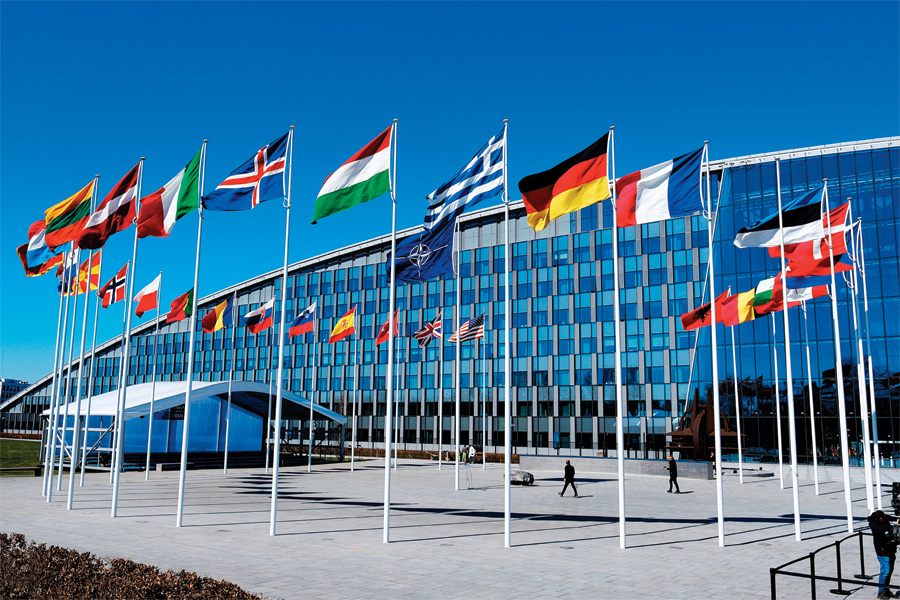
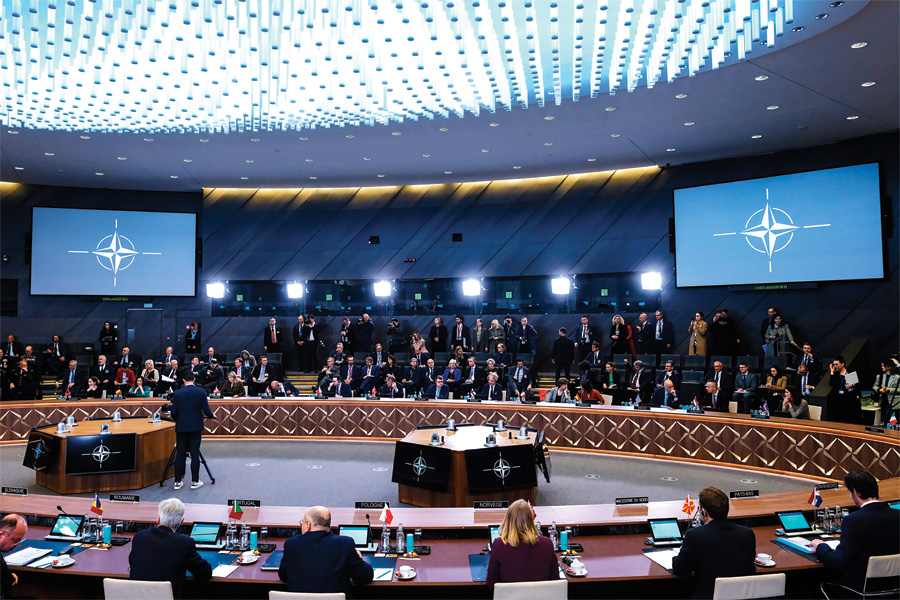
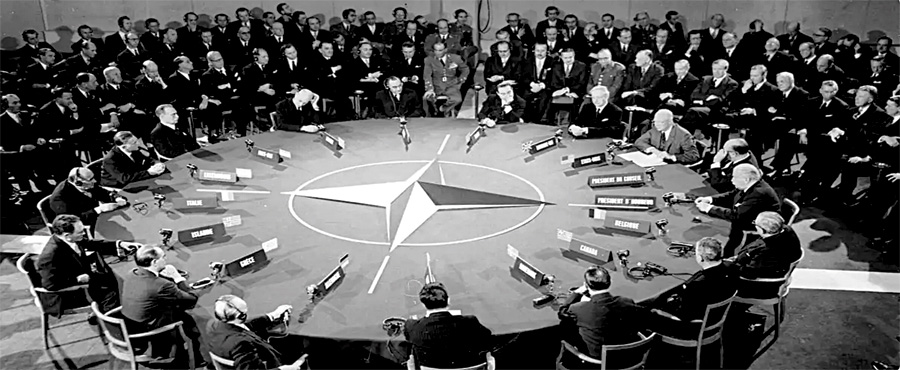
A clear illustration of military agreements as instruments of security cooperation can be found in the framework of North Atlantic Treaty Organization (NATO). Through collective defense arrangements, joint exercises, and standardized operational doctrines, NATO agreements have significantly enhanced interoperability and readiness among member states. Smaller states benefit from access to advanced planning systems, training programs, and collective deterrence mechanisms, while larger states gain strategic cohesion and burden sharing. These arrangements demonstrate how military agreements can strengthen national and collective security when cooperation is based on shared interests and relatively balanced institutional relationships43.
3- Kinds and Typologies of Military Agreements
Military agreements vary significantly in scope, legal form, and strategic intent. Scholars generally distinguish between several main categories based on their functional objectives and institutional depth.
a- Defense cooperation agreements provide broad frameworks for long-term collaboration, covering training, joint exercises, doctrine exchange, and institutional support. These agreements are often open-ended and serve as umbrella instruments guiding sustained military engagement between states44.
b- Training and advisory agreements focus primarily on human capital development. They involve officer education, tactical instruction, leadership training, and advisory missions aimed at improving command effectiveness and operational planning. Such agreements are particularly significant for armed forces undergoing modernization or organizational reform45.
c- Arms and equipment agreements regulate the transfer, maintenance, and upgrading of military hardware. Beyond procurement, these agreements frequently include logistical support, spare parts provision, and technical assistance, directly affecting force sustainability and readiness46.
d- Intelligence-sharing agreements facilitate the exchange of information related to security threats, counterterrorism, and regional stability. While operationally valuable, these agreements are among the most sensitive forms of military cooperation due to concerns over sovereignty, confidentiality, and political leverage47.
e- Status of Forces Agreements (SOFAs) establish the legal status of foreign military personnel operating within a host state. They define jurisdiction, privileges, immunities, and operational rules, thereby shaping the legal boundaries and political acceptability of military cooperation48.
Chapter Four
Historical Evolution of Military Agreements
1- History
Historically, military agreements have evolved in response to transformations in the international system. In earlier periods, military cooperation was largely ad hoc and alliance-based, centered on immediate threat response and balance-of-power considerations49.
During the Cold War, military agreements became institutionalized instruments of bloc politics, serving as mechanisms for alliance cohesion, deterrence, and ideological alignment. These agreements structured
long-term military dependence, standardization, and interoperability within competing security blocs50.
In the post-Cold War era, the focus of military agreements shifted significantly. Rather than emphasizing large-scale interstate warfare, agreements increasingly prioritized capacity building, peacekeeping, counterterrorism, and security sector reform. Multinational organizations and partnerships began to play a greater role in shaping doctrine, training standards, and interoperability frameworks51.
2- Contemporary Period
In the contemporary international system, military agreements have continued to evolve in response to globalization, asymmetric threats, and the diffusion of power. Today, military agreements are no longer limited to traditional alliance structures or state-to-state defense pacts52. Instead, they increasingly function as flexible governance instruments designed to manage complex security challenges such as terrorism, cyber threats, hybrid warfare, maritime security, and regional instability53.
Modern military agreements emphasize interoperability, training assistance, intelligence sharing, and logistical cooperation rather than formal mutual defense commitments. Many agreements are deliberately framed in adaptable and modular terms, allowing states to cooperate without entering rigid alliance obligations. This reflects a broader shift toward network-based security cooperation, where states participate simultaneously in multiple overlapping security arrangements tailored to specific threats or regions54.
Another defining feature of contemporary military agreements is the growing role of capacity-building and advisory missions, particularly involving partnerships between advanced military powers and developing or fragile states. These agreements aim to enhance institutional resilience, professional military education, civilian oversight, and operational effectiveness. While presented as tools for stabilization and security enhancement, such arrangements often generate long-term structural dependencies in doctrine, procurement, and strategic orientation55.
Furthermore, military agreements today are increasingly embedded within multilateral and regional frameworks, including security partnerships, coalitions, and mission-based arrangements. These frameworks allow states to share burdens and legitimacy while retaining strategic flexibility. At the same time, the proliferation of non-binding or semi-formal instruments such as defense cooperation agreements and memoranda of understanding illustrates a preference for political maneuverability over legally rigid commitments56.

Chapter Five
Military Agreements, Power Asymmetry and Strategic Implications
1- Military Agreements and Power Asymmetry
Military agreements frequently occur between states with unequal capabilities, resources, and political influence. In such asymmetric relationships, military agreements may function simultaneously as tools of assistance and instruments of strategic influence57.
For weaker or resource-constrained states, military agreements provide access to training, equipment, and expertise essential for maintaining basic defense functions. For stronger states, these agreements offer strategic access, regional presence, and political leverage within partner institutions58.
While asymmetry does not negate the benefits of cooperation, it shapes the structure and implementation of agreements. Conditionality, aid prioritization, and doctrinal influence often reflect the interests of the stronger partner, raising concerns regarding autonomy and long-term strategic flexibility59.
Military agreements often reflect underlying power asymmetries that shape their long-term strategic effects. A notable example is found in defense cooperation agreements between France and several African states, where military assistance has historically combined training, advisory missions, and security guarantees with sustained political and strategic influence. While such agreements have contributed to force development and regime stability, they have also entrenched dependency through reliance on external doctrine, equipment, and intervention capacity. This dynamic illustrates how military agreements may function simultaneously as instruments of cooperation and mechanisms of strategic control, particularly when concluded between unequal partners60.
2- Strategic and Institutional Implications
Beyond immediate operational gains, military agreements exert long-term institutional effects. Repeated exposure to external doctrines, planning models, and evaluation standards influences how armed forces define professionalism, effectiveness, and legitimacy61.
This process of institutional diffusion can strengthen organizational capacity, improve governance, and enhance civil–military relations. At the same time, it may generate tensions between imported models and domestic political, cultural, or strategic contexts, particularly in states with fragile institutional environments62.
Consequently, military agreements should be understood not merely as technical arrangements, but as strategic instruments that reshape military behavior, institutional norms, and patterns of dependency over time.
3- Pros and Cons of Military Agreements
Military agreements provide a range of strategic, operational, and political advantages for participating states. At the operational level, they enhance military readiness and effectiveness through joint training, interoperability, intelligence sharing, and access to advanced technology63. Cost sharing and burden distribution reduce the financial strain of defense modernization, allowing smaller or resource-constrained states to maintain credible military capabilities64.
Politically, military agreements can strengthen international legitimacy and signaling, reassuring allies while deterring potential adversaries by clarifying commitments and expectations65. From an institutional perspective, such agreements often promote professionalization, standardization of doctrine, and improved civil–military relations, embedding long-term reforms within partner armed forces66.
At the same time, military agreements entail significant risks and trade-offs. Structural dependency on external support can constrain strategic autonomy and narrow policy options, particularly when assistance is conditional or asymmetrical67. Reliance on foreign equipment, logistics, or intelligence may generate path dependencies and interoperability lock-ins that limit independent decision-making and adaptability68. Politically, military agreements can expose states to external pressure, alliance entrapment, or escalation dynamics that draw them into conflicts unrelated to their core national interests69.
Over time, these dynamics may contribute to a gradual erosion of sovereignty, as defense planning, procurement, and operational priorities become aligned with the preferences of more powerful partners rather than domestic strategic assessments70. Consequently, while military agreements remain central to contemporary security strategies, their benefits must be weighed against the risks of dependency, entanglement, and constrained autonomy within an unequal international system.
4- Conditions for Durable Cooperation
Military agreements are most likely to remain instruments of genuine security cooperation when they are embedded within transparent governance structures, diversified partnership networks, and clearly articulated national defense strategies. Balanced decision-making procedures, sunset clauses, periodic review mechanisms, and multi-source procurement policies reduce hierarchical dominance and mitigate dependency risks. Where domestic oversight institutions are robust, military agreements tend to reinforce national capacity rather than evolve into mechanisms of strategic control71.
Conclusion
This article has examined military agreements through a step-by-step analytical approach, beginning with the general concept of agreements and moving toward their international and military dimensions. It has shown that agreements are not merely symbolic commitments, but practical instruments that translate cooperation into concrete institutional and operational outcomes.
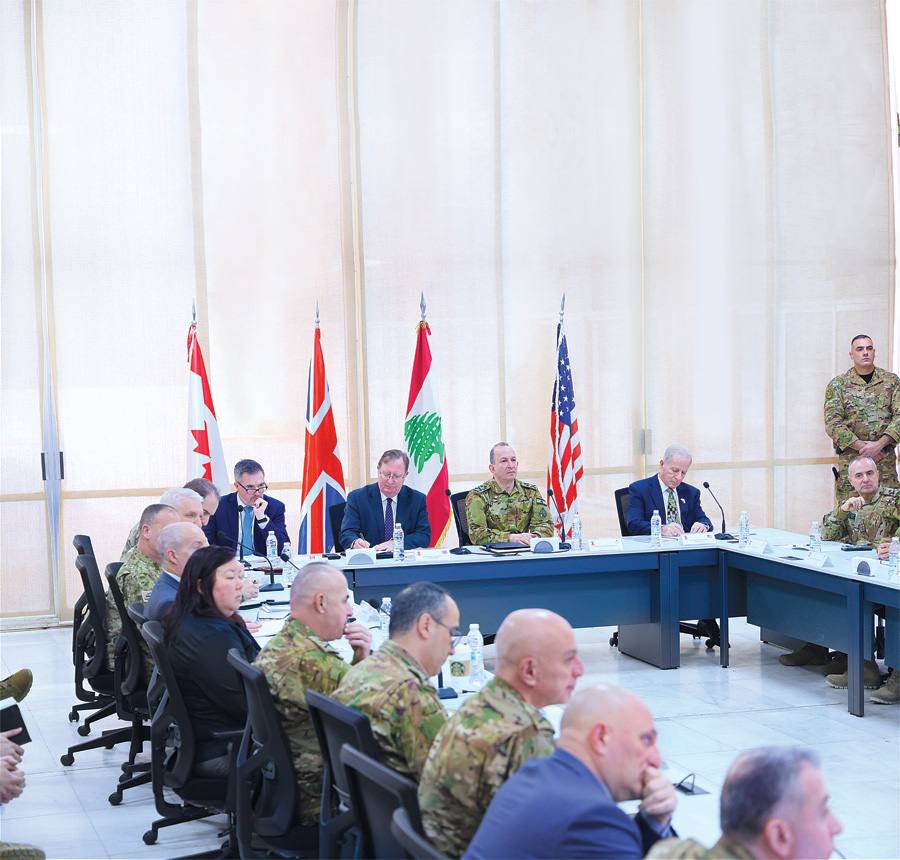
Military agreements play a significant role in strengthening military capabilities by supporting capacity building, modernization, and institutional development. At the same time, they carry inherent risks, particularly in contexts of power asymmetry, where dependency, constraints on sovereignty, and reduced strategic autonomy may emerge. The experience of the Lebanese Armed Forces highlights both the necessity of such agreements and the structural limitations they can impose.
Ultimately, military agreements cannot be understood as purely cooperative tools nor as automatic mechanisms of external control. Their effects vary according to the balance of power between partners, the resilience of domestic institutions, and the strategic choices made by national decision-makers. This analysis therefore emphasizes that military agreements operate along a spectrum rather than within a fixed category. Evaluating them requires attention not only to their formal objectives, but also to their long-term impact on institutional autonomy, decision-making capacity, and strategic flexibility within an unequal international system.
References
1- Aust, A. (2013). Modern treaty law and practice (3rd ed.). Cambridge University Press.
2- Avant, D. D. (2005). The market for force: The consequences of privatizing security. Cambridge University Press.
3- Axelrod, R. (2006). The evolution of cooperation (Rev. ed.). Basic Books.
4- Brownlie, I. (2008). Principles of public international law (7th ed.). Oxford University Press.
5- Buzan, B., & Wæver, O. (2003). Regions and powers: The structure of international security. Cambridge University Press.
6- Chafer, T. (2016). France and Africa. International Affairs, 92(2), 515–533.
7- Charbonneau, B. (2014). Intervention in Mali: Another imperial war? African Security, 7(4), 1–20. https://doi.org/10.1080/19392206.2014.975672
8- Dixon, M., McCorquodale, R., & Williams, S. (2016). Cases and materials on international law (6th ed.). Oxford University Press.
9- Duffield, J. S. (2001). World power forsaken: Political culture, international institutions, and German security policy after unification. Stanford University Press.
10- Farrell, H., & Newman, A. L. (2019). Weaponized interdependence. International Security, 44(1), 42–79.
11- Feaver, P. D. (2003). Armed servants: Agency, oversight, and civil–military relations. Harvard University Press.
12- Hartley, K. (2012). Defense economics. In Handbook of Defense Economics (Vol. 2). Elsevier.
13- Hoffman, F. G. (2007). Conflict in the 21st century: The rise of hybrid wars. Potomac Institute.
14- Kaldor, M. (2012). New and old wars: Organized violence in a global era (3rd ed.). Polity Press.
15- Klabbers, J. (2015). International law (2nd ed.). Cambridge University Press.
16- Krasner, S. D. (1999). Sovereignty: Organized hypocrisy. Princeton University Press.
17- Lake, D. A. (2009). Hierarchy in international relations. Cornell University Press.
18- Lanteigne, M. (2019). Chinese foreign policy. Routledge.
19- Lebanese Constitution. (1926, as amended). Republic of Lebanon.
20- Mastny, V. (2002). The Cold War and Soviet insecurity. Oxford University Press.
21- McNair, A. (1961). The law of treaties. Oxford University Press.
22- Mearsheimer, J. J. (2001). The tragedy of great power politics. W. W. Norton & Company.
23- NATO. (2019). Partnership interoperability initiative: Interoperability roadmap. North Atlantic Treaty Organization.
24- Pugh, M., Cooper, N., & Goodhand, J. (2004). War economies in a regional context: Challenges of transformation. Lynne Rienner.
25- Sayigh, Y. (2017). Arab armed forces. Carnegie Middle East Center.
26- Schelling, T. C. (1966). Arms and influence. Yale University Press.
27- Shaw, M. N. (2017). International law (8th ed.). Cambridge University Press.
28- Snyder, G. H. (1984). The security dilemma in alliance politics. World Politics, 36(4), 461–495.
29- Sun, Y. (2021). China’s security engagement in Africa. Journal of Contemporary China.
30- Vienna Convention on the Law of Treaties. (1969). United Nations.
31- Walt, S. M. (1987). The origins of alliances. Cornell University Press.
32- Westad, O. A. (2005). The global Cold War. Cambridge University Press.
Margin
1. Axelrod, R. (2006). The evolution of cooperation. Basic Books.
2. Shaw, M. N. (2017). International law (8th ed.). Cambridge University Press.
3. Mearsheimer, J. J. (2001). The tragedy of great power politics. W. W. Norton & Company.
4. Lake, D. A. (2009). Hierarchy in international relations. Cornell University Press.
5. Vienna Convention on the Law of Treaties. (1969). United Nations.
6. Axelrod, (2006).The Evolution of Cooperation.
7. Shaw, (2017). International Law.
8. Mearsheimer, (2001). The Tragedy of Great Power Politics.
9. Lake, (2009). Hierarchy in International Relations.
10. Walt, S. M. (1987). The origins of alliances. Cornell University Press.
11. Lake, (2009). Hierarchy in International Relations.
12. Duffield, J. S. (2001). World power forsaken: Political culture, international institutions, and German security policy after unification. Stanford University Press.
13. Snyder, G. H. (1984). The security dilemma in alliance politics. World Politics, 36(4), 461–495.
14. Krasner, S. D. (1999). Sovereignty: Organized hypocrisy. Princeton University Press.
15. Buzan, B., & Wæver, O. (2003). Regions and powers: The structure of international security. Cambridge University Press.
16. Pugh, M., Cooper, N., & Goodhand, J. (2004). War economies in a regional context: Challenges of transformation. Lynne Rienner Publishers.
17. Krasner, S. D. (1999). Sovereignty.
18. Avant, (2005). The Market for Force.
19. McKendrick, E. (2020). Contract law: Text, cases, and materials (7th ed.). Oxford University Press.
20. Shaw, (2017). International Law.
21. Brownlie, I. (2008). Principles of public international law (7th ed.). Oxford University Press.
22. Axelrod, (2006). The Evolution of Cooperation.
23. Vienna Convention. (1969).
24. Shaw, (2017). International Law.
25. Vienna Convention, (1969).
26. Aust, A. (2013). Modern treaty law and practice (3rd ed.). Cambridge University Press.
27. Vienna Convention, (1969).
28. Shaw, (2017). International Law.
29. McNair, A. (1961). The law of treaties. Oxford University Press.
30. Brownlie, (2008). Principles of Public International Law.
31. Klabbers, J. (2015). International law (2nd ed.). Cambridge University Press.
32. Dixon, M., McCorquodale, R., & Williams, S. (2016). Cases and materials on international law (6th ed.). Oxford University Press.
33. Aust, (2013). Modern Treaty Law and Practice.
34. Brownie, (2008). Principles of Public International Law.
35. Shaw, (2017). International Law.
36. Walt, (1987). The Origins of Alliances.
37. Mearsheimer, (2001). The Tragedy of Great Power Politics
38. Ibid.
39. Lake, (2009). Hierarchy in International Relations.
40. Avant, D. D. (2005). The market for force: The consequences of privatizing security. Cambridge University Press.
41. NATO. (2019). Partnership interoperability initiative: Interoperability roadmap. North Atlantic Treaty Organization.
42. Avant, (2005). The Market for Force.
43. Walt, (1987). The Origins of Alliances.
44. Ibid.
45. Avant, (2005). The Market for Force.
46. Mearsheimer, (2001). The Tragedy of Great Power Politics.
47. Lake, (2009). Hierarchy in International Relations.
48. Shaw, (2017). International Law.
49. Walt, (1987). The Origins of Alliance.
50. Mearsheimer, (2001). The Tragedy of Great Power Politics.
51. NATO, (2019). Partnership interoperability initiative.
52. Kaldor, M. (2012). New and old wars: Organized violence in a global era (3rd ed.). Polity Press.
53. Hoffman, F. G. (2007). Conflict in the 21st century: The rise of hybrid wars. Potomac Institute.
54. Lake, (2009). Hierarchy in International Relations.
55. Buzan, B., & Wæver, O. (2003). Regions and powers.
56.( ) Aust, (2013). Modern Treaty Law and Practice.
57. Lake, (2009). Hierarchy in International Relations.
58. Mearsheimer, (2001). The Tragedy of Great Power Politics.
59. Lake, (2009). Hierarchy in International Relations.
60. Lake, (2009). Hierarchy in International Relations.
61. Avant, (2005). The Market for Force.
62. Shaw, (2017). International Law.
63. NATO, (2019). Partnership interoperability initiative.
64. Hartley, K. (2012). Defense economics. In Handbook of Defense Economics (Vol. 2). Elsevier.
65. Schelling, T. C. (1966). Arms and influence. Yale University Press
66. Duffield, J. S., (2001). World Power Forsaken.
67. Lake, (2009). Hierarchy in International Relations.
68. Farrell, H., & Newman, A. L. (2019). Weaponized interdependence. International Security, 44(1), 42–79.
69. Snyder, G. H. (1984). The security dilemma in alliance politics
70. Krasner, S. D. (1999). Sovereignty.
71. Feaver, P. D. (2003). Armed servants: Agency, oversight, and civil–military relations. Harvard University Press.
72. Mearsheimer, (2001). The Tragedy of Great Power Politics.
73. Avant, (2005). The Market for Force.
74. Ibid.
75. Shaw, (2017). International Law.
76. Lake, (2009). Hierarchy in International Relations.
77. Vienna Convention, (1969).
78. Sayigh, Y. (2017). Arab armed forces. Carnegie Middle East Center.
79. Duffield, J. S., (2001). World Power Forsaken.
80. Lebanese Constitution. (1926, as amended). Republic of Lebanon.
81. Sayigh, Y. (2017). Arab armed forces.
82. Walt, (1987). The Origins of Alliances.
83. Farrell and Newman, (2019). Weaponized interdependence.
84. Mastny, V. (2002). The Cold War and Soviet insecurity. Oxford University Press.
85. Duffield, J. S., (2001). World Power Forsaken.
86. Charbonneau, B. (2014). Intervention in Mali: Another imperial war? African Security, 7 (4), 1–20. https://doi.org/10.1080/19392206.2014.975672.
87. Lanteigne, M. (2019). Chinese foreign policy. Routledge.
88. Sun, Y. (2021). China’s security engagement in Africa. Journal of Contemporary China.
89. Feaver, (2003). Armed Servants.
90. Walt, (1987). The Origins of Alliances.
91. Avant, (2005). The Market for Force.
92. Pugh, M., Cooper, N., & Goodhand, J. (2004). War economies in a regional context.
الاتفاقيات العسكرية: تعاون أمني أم سيطرة استراتيجية؟
العميد الركن الإداري عماد الحسن
تتناول الدراسة دور الاتفاقيات العسكرية في العلاقات الدولية، وتطرح تساؤلًا أساسيًا: هل هي وسيلة لتعزيز التعاون الأمني أم أداة لتحقيق السيطرة الاستراتيجية؟ وتخلص إلى أنها ليست إحداهما فقط، بل تتحرك ضمن طيف يتأثر بتوازن القوى بين الدول.
كما توضح أن هذه الاتفاقيات تساهم بشكل كبير في تطوير القدرات العسكرية من خلال التدريب، ونقل التكنولوجيا، وتحسين الجاهزية والتنسيق بين الجيوش. كذلك تمنح الدول، خاصة الضعيفة منها، دعمًا ضروريًا للحفاظ على أمنها واستقرارها. في المقابل، تحمل هذه الاتفاقيات مخاطر مهمة، أبرزها خلق نوع من التبعية للدول الأقوى، والتأثير على استقلالية القرار العسكري والسيادي.
تركّز الدراسة على أن العامل الحاسم هو عدم توازن القوى، حيث يمكن للدول الكبرى استخدام هذه الاتفاقيات كوسيلة نفوذ غير مباشر عبر فرض شروط، أو التأثير على العقيدة العسكرية والتسليح. كما تبرز أهمية الرقابة الداخلية والمؤسسات الوطنية في الحد من هذه التأثيرات.
وفي الحالة اللبنانية، تبيّن أن اعتماد الجيش اللبناني على الاتفاقيات العسكرية يأتي نتيجة لظروف عدة، حيث توفر هذه الاتفاقيات دعمًا أساسيًا لتعزيز قدراته، لكنها في الوقت نفسه تفرض تحديات مختلفة.
وتخلص الدراسة إلى أن نجاح الاتفاقيات العسكرية يعتمد على كيفية إدارتها، وأن تحقيق التوازن بين الاستفادة منها والحفاظ على السيادة يتطلب تنويع الشراكات، وتعزيز الرقابة، ووضع استراتيجية وطنية واضحة.
